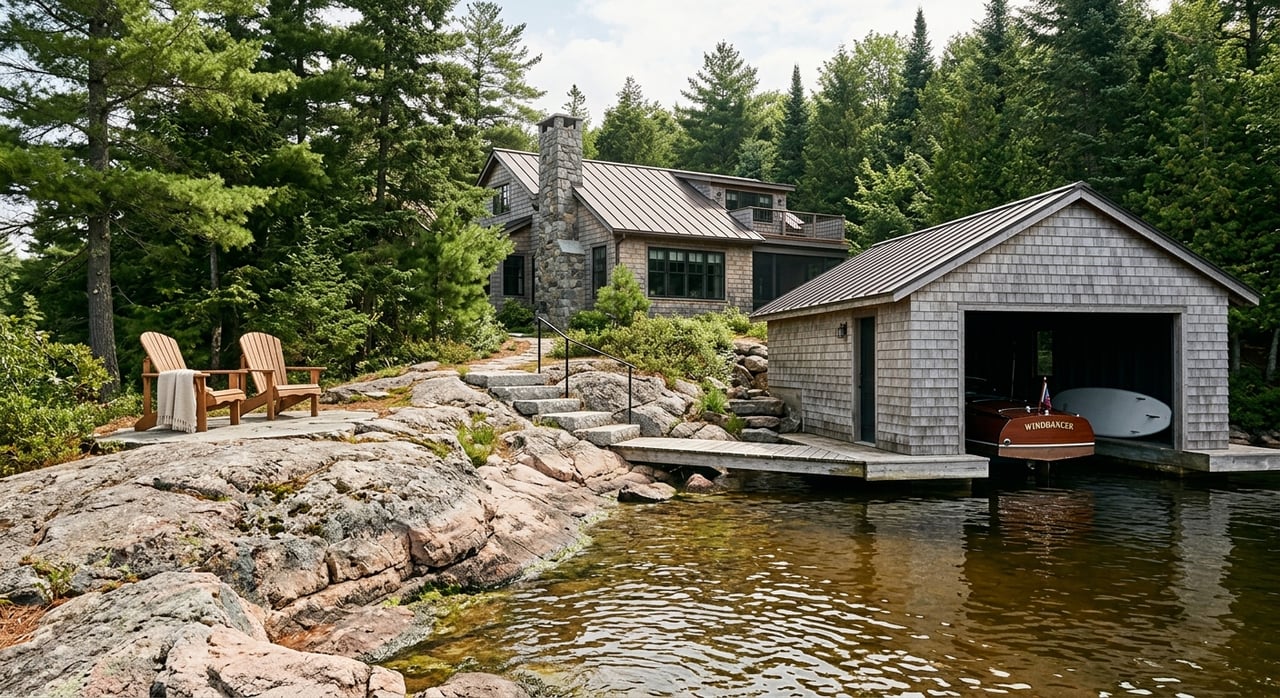
Muskoka Lakes Comparison for Buyers: Muskoka, Rosseau & Joseph
April 16, 2026
April 16, 2026
Trying to choose between Lake Muskoka, Lake Rosseau, and Lake Joseph? You are not alone. Many buyers begin with the same question, especially when all three lakes are iconic, connected, and deeply tied to the Muskoka lifestyle. The good news is that each lake has a distinct feel, and once you understand the differences in access, shoreline character, and day-to-day use, your shortlist becomes much clearer. Let’s dive in.
Lake Muskoka, Lake Rosseau, and Lake Joseph are all part of the same broader boating system, but they do not live the same way day to day. The Township of Muskoka Lakes identifies all three as Category 1 large lakes, and the municipality is centered around them, with Bala and Port Carling serving as key urban anchors. The township profile also notes that these larger lakes have a different built form and building type profile than smaller lakes in the area, which helps explain why the ownership experience can vary from one lake to another. According to the township’s planning documents, Muskoka Lakes is about two hours from Toronto, which is part of the appeal for many second-home buyers.
At a high level, Lake Muskoka tends to feel the most active and mixed. Lake Rosseau often offers a middle ground with strong connectivity and a more natural shoreline profile. Lake Joseph typically appeals to buyers who want a more tucked-away, private setting. Those are practical inferences based on the available watershed and municipal access data, not official rankings.
Lake Muskoka is the largest of the three at about 100 square kilometers. The Lake Muskoka subwatershed report notes that it includes Bala, Port Carling, MacTier, and parts of Gravenhurst, and that the lake flows into the Moon River at Bala before reaching Georgian Bay. It also describes Lake Muskoka as one of the first parts of the larger watershed to be developed.
That history still shows up in how the lake feels today. Lake Muskoka usually offers a broader range of waterfront settings, easier ties to services, and a busier boating environment. For many buyers, that means convenience, variety, and an active summer rhythm.
The township’s docks and boat launches inventory lists 17 access points tied to Lake Muskoka. That is notably more than Lake Rosseau or Lake Joseph. In practical terms, it suggests a broader municipal access network and more day-use activity across the lake.
The shoreline data also points to a more built and historically developed setting. The watershed report says about 10% of the subwatershed land is developed, and roughly 75% to 90% of shoreline has been altered. For buyers, that often translates into a lake that feels more established, more varied, and more active around key hubs.
Lake Muskoka may be the strongest fit if you want:
If you enjoy movement, convenience, and a lake with a broad mix of properties and surroundings, Lake Muskoka often deserves a close look.
Lake Rosseau sits in the middle of the system, both geographically and in lifestyle terms. Watershed sources place the Rosseau subwatershed at 42,583 hectares, and Lake Rosseau itself is about 55 square kilometers. Its south end connects closely to Port Carling, while the village of Rosseau helps define its northern character. The northern portions of both Rosseau and Joseph also extend into Seguin Township in Parry Sound District, which adds to the lake’s broader geographic footprint. You can explore more in the Rosseau subwatershed report.
Rosseau often feels like a balance point. You still have excellent boating connectivity, but the shoreline profile is generally less altered than Lake Muskoka. For many buyers, that creates an appealing mix of social access, cruising routes, and stronger privacy.
Lake Rosseau is linked to Lake Muskoka through Port Carling and the Indian River locks, and it connects to Lake Joseph through the Port Sandfield canal and swing bridge corridor. That makes Rosseau especially attractive if you value being able to move around the larger system with ease. The township’s access-by-lake and transportation materials reinforce how important lake travel is across the municipality, especially for waterfront and island access.
Public access is more limited than on Lake Muskoka, with 7 access points listed by the township. That lower count does not mean the lake is difficult to use, but it does suggest a somewhat quieter public access pattern. Combined with the watershed data, Rosseau often reads as more natural and estate-like than Lake Muskoka.
Lake Rosseau may be a good fit if you want:
Rosseau is often the lake buyers choose when they want a little of everything without leaning too far toward either high activity or maximum seclusion.
Lake Joseph is roughly 51 to 55 square kilometers, depending on the source, and it is often seen as the most geographically tucked away of the three. Access tends to cluster around Foot’s Bay, Glen Orchard, and Minett rather than spreading across a broad set of road-access nodes. That pattern helps shape the lake’s reputation for privacy and retreat-oriented ownership.
Joseph still sits within the same connected boating system, but its feel is different. Rather than being anchored by a large town network of its own, it connects to Rosseau through Port Sandfield. For many buyers, that creates a sense of remove without complete isolation.
The township inventory lists only 4 access points tied to Lake Joseph. Again, that does not make it hard to reach, but it does support the idea that it is the most access-sparse of the big three. For buyers focused on privacy, that difference can matter.
The Rosseau and Joseph watershed area is also described as being about 7% developed, with 12% Crown land, and the report card cited for that watershed notes just 13.62% altered shoreline. Compared with Lake Muskoka, that points to a less developed shoreline pattern overall. In everyday terms, Lake Joseph often feels quieter, more secluded, and more retreat-like.
Lake Joseph may be the right match if you want:
For buyers who place a premium on discretion, space, and a calm waterfront setting, Lake Joseph often rises to the top.
One of the clearest practical differences among the lakes is municipal access. Here is a simple comparison based on the township inventory.
| Lake | Township-listed access points | General feel |
|---|---|---|
| Lake Muskoka | 17 | Broad access, active day use, varied settings |
| Lake Rosseau | 7 | Balanced access, connected, moderately private |
| Lake Joseph | 4 | More limited access, private, secluded feel |
This does not tell the whole story, but it is a useful starting point. If you want a lake that feels busy and broadly accessible, Lake Muskoka often leads. If you want the opposite, Lake Joseph usually stands out. Lake Rosseau sits comfortably between them.
All three lakes are big-water boating lakes, not quiet no-motor cottage lakes. That matters if your ideal summer includes cruising between villages, visiting different parts of the chain, or covering meaningful distance by boat. Port Carling is the key crossroads between Lake Muskoka and Lake Rosseau, while Port Sandfield is the junction between Lake Rosseau and Lake Joseph.
The township’s boating code of conduct is also worth keeping in mind. Boaters are asked to keep at least 30 metres from the shoreline when moving at speed, slow near docks and swimming areas, and avoid wake in narrow sections. Those habits are especially relevant near village cores, narrows, and the busy Port Carling and Port Sandfield corridors.
If boating is central to your buying decision, the right question is not just which lake is best. It is how you want to boat. Some buyers want easy routes, activity, and proximity to hubs. Others want long, scenic runs and a quieter home shoreline at the end of the day.
It is easy to focus on the lake name first, but your experience will also depend on the property itself. Bay location, exposure, shoreline composition, road access, and frontage type can all shape daily use. Two cottages on the same lake can feel completely different.
That is especially true on Rosseau and Joseph, where village-adjacent areas, narrows, and quieter northern stretches can create very different micro-markets. A well-positioned property on one lake may suit your lifestyle better than a more famous address on another. That is why local guidance matters when you start narrowing your options.
If you are deciding between Lake Muskoka, Lake Rosseau, and Lake Joseph, the best choice often comes down to the kind of Muskoka experience you want to have. Lake Muskoka usually suits buyers who want variety, convenience, and a more active environment. Lake Rosseau often appeals to those who want a thoughtful balance of connectivity, privacy, and classic big-lake cruising. Lake Joseph is frequently the favorite for buyers who value privacy, quieter settings, and a more secluded estate feel.
If you want help comparing specific bays, access patterns, or property types across the big lakes, Marilyn Mannion offers the kind of local, high-touch guidance that can make your search more focused and far less overwhelming.
Stay up to date on the latest real estate trends.

Let me help you with your Muskoka real estate needs.